




The lights go out. The fridge stops humming. It's dark, it's quiet, and you've got about ten seconds before somebody in the house asks what happened.
What's the first thing you reach for?
Most people say one of four things: a flashlight, a jug of water, a solar generator, or their phone. All four are good things to own. But in that first minute, each one has a catch.
The flashlight
This is the most common answer, and there's a good reason for it. A flashlight is the one thing that makes everything else easier: finding the breaker, reading a label, keeping the kids calm. The catch is where it lives. Most flashlights sit in a junk drawer, and most of them haven't been switched on since the last outage. A flashlight you have to hunt for in the dark isn't helping you yet.
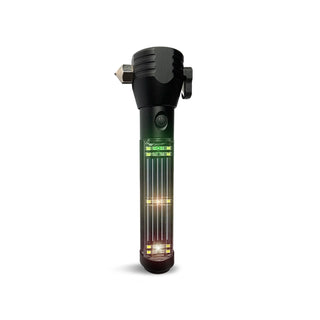
If you're replacing one, the HaloXT Tactical 9-in-1 Solar Flashlight charges from the sun, so dead batteries aren't the thing that lets you down.
The phone
The second most common answer, and it's not a bad instinct. Your phone is your weather alerts, your calls to family, and your quickest way to check whether the outage is just your block or the whole county. The catch is using it as a flashlight, which drains the one battery you need most. Keep it for what only it can do, and keep something charged next to it.
The Patriot Power Cell-CX Portable Solar Power Bank is pocket-sized and keeps your phone on even when the power's out.
The water
Water matters more than almost anything in a long outage, and having it already stored is a real advantage: no scramble, no store run. The catch is timing. In the first minute, it's not the problem. Your tap probably still runs. This is a day-two concern, and the time to solve it is before the lights go out, not after.
Two ways to be ready: the Patriot Pure Personal Water Filter Straw lets you drink directly from fresh water sources, and the Patriot Pure Water Storage System keeps a 13-day supply in stackable bricks that hold up better than thin store jugs.
The solar generator
If it's charged and sitting where you can reach it, this is the best thing on the list. It runs the fridge, charges the phone, keeps a lamp on, and recharges from the sun when the grid doesn't come back quickly. The catch is readiness. A generator sitting at 10% in the garage is just a heavy box. Like everything else here, it only works if it was ready ahead of time.
If you're shopping, start with our solar power best sellers.
The real answer is all of the above
The first thing you grab should be all four at once, from the one place you put them before the lights went out. Any one of them alone has a catch. Together, in one spot, they cover the first hour.
It's your home emergency kit, kept in one place instead of scattered around the house. Usually that's by the door you use most or in the kitchen, and everything you need in the first hour lives there together: a flashlight with fresh batteries, a weather radio, a gallon of water, a charged power bank or solar generator, and a printed list of the phone numbers you'd want. When the power drops, you don't think, you don't search, you walk to the kit.
Set yours up tonight
This takes about ten minutes.
- Pick the spot for your kit. Somewhere you can find with your eyes closed, like the shelf by the back door.
- Put a flashlight there and check it works. Tape a spare set of batteries to it.
- Add a gallon of water and a charged power bank or your solar generator. Put a reminder on your calendar to top the charge off on the first of every month.
- Write down the numbers that matter: your power company's outage line, a neighbor, family out of town. Tape the list to the wall above the spot.
That's it. Next time the power goes out, you'll already know the answer to "what do I grab first."
Now it's your turn
Be honest. The last time the power went out, what did you reach for first?
Tell us in the comments below!