




The only good thing about a hurricane is the advance notice. Normally residents of a state where a hurricane is likely to land are given from several days to a week to prepare or evacuate.
No such luck with tornadoes. They come on fast and furious. There is usually very little time to prepare. But their damage can be just as catastrophic.
Any advance notice whatsoever – such as what an emergency weather radio provides – can be life-saving.
With Tornado Preparedness Week in full swing, today we want to talk about what you can do to prepare for one.
Disturbing tornado statistics
We’re all aware that extreme weather is increasing in the United States. Not only in the number of severe events. But also in their scope and duration.
We don’t have to go back far to recall how bad tornado season is becoming. Last year was the second-worst tornado season on record. The previous second-worst tornado season was just three years earlier (2021).
More than 1,800 tornadoes were confirmed during 2024. The National Weather Service issued 3,936 tornado warnings. Equally disturbing? Tornadoes occurred in 47 states. If they were filming a remake of The Wizard of Oz, they wouldn’t have to do it in Kansas.
Many tornadoes were spawned by hurricanes in 2024. Hurricane Beryl was responsible for 68 twisters. Hurricane Milton produced 46, Helene 35, and Debby 24.
How did your state fare?
States most affected by tornadoes in 2024 were Texas, Iowa, Nebraska, Illinois, and Missouri. Texas had the most confirmed tornadoes with 169. Followed by Nebraska and Iowa with 131 each. Illinois had 126 and Missouri 105.
Other states plagued by significant tornado activity last year were Florida and Alabama. Plus Kansas, Kentucky, Oklahoma, and Ohio.
Wind speeds were at hurricane force. More than 50 deaths were attributed to the storms. Flooding caused considerable damage. And countless structures were damaged or destroyed.
And, of course, millions of homes and businesses lost electrical power. Some blackouts lasted for weeks.
The four strongest tornadoes of 2024 occurred in April and May. Two in Oklahoma and one each in Nebraska and Iowa. They were each rated EF4. Meaning winds speeds were measured between 166 and 200 mph.
Tornado watches & warnings
Tornado warning signs include rapidly darkening skies. Plus clouds rotating in a circular pattern. As well as a funnel cloud being spotted. And sometimes a rushing or roaring noise is heard.
If conditions are right for a tornado to develop, a tornado watch will be issued. If a tornado warning is proclaimed, that means a tornado has been spotted in your area. You should seek shelter immediately.
Know what to do & where to go
No one can defend themselves from this incredible force of nature. Your best bet when a tornado strikes is to put yourself in the best possible position to avoid it.
Fortunately, you don’t have to wait for an actual tornado to come roaring at you to practice dodging it. There are a variety of actions you can take now to protect yourself and your family.
First and foremost, you should make sure to have an emergency response plan in place.
Whether you are home or at the office, everyone should be aware of exactly what to do. And where to take shelter.
10 items for your tornado kit
Well in advance of a tornado, put together a tornado emergency kit. For yourself and those in your household. Keep one in a safe place in your home. And another in your vehicle. And one at the office.
This kit should include the following:
- Emergency weather radio to gain vital information about the storm. Including where it is, where it’s heading, and at what speed it’s traveling.
- Medicines you may need if returning to your home in a timely fashion is temporarily impossible
- Helmet to protect your head from flying debris
- Water bottles and a water straw to filter water that may become contaminated by flooding
- Comprehensive first-aid kit to handle a variety of injuries
- No-prep emergency food bars and other non-perishable foods
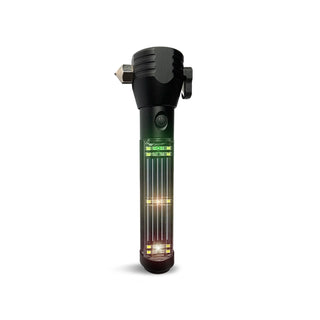
- Tactical flashlight featuring multiple tools
- Contact list
- Fully-charged cellphone charger to make sure you can contact loved ones and first responders
- Dust mask
Emergency radio is essential
Once it appears you may be affected by a tornado, tune into your emergency radio.
Offering five steps to take during a tornado is www.Ready.gov. They are:
- If you’re indoors, get to a basement, storm cellar or the lowest level of a building. Stay away from windows, doors, corners of buildings and outside walls.
- If you’re driving but can’t get to a shelter, get out of the car. Lie face down with your hands over your head in a ditch. Or other lower levels near the roadway. But away from vehicles.
- If you’re indoors but can’t get to a lower level, find the smallest interior room or hallway as far from the exterior of the building as possible.
- If you’re driving and you see a tornado, don’t try to outrun it. Pull over immediately and seek shelter. Avoid overpasses, bridges, tall buildings, and flying debris.
- If you’re driving, head to the closest structure where you can take shelter.
Once a tornado passes, you may not be out of the woods yet. Most people who suffer post-tornado injuries get hurt while trying to clean up debris. Including glass and nails.
Also keep an eye out for downed power lines. Plus ruptured gas lines and damaged structures.
All good advice. But whatever you can do to be proactive rather than reactive will be a big help. And that includes gaining crucial information from an emergency weather radio.