

In the recent midterm elections, data centers were on the ballot in 41 communities across 10 states. Voters sided against them in every one but one. The lone exception was Harwood, North Dakota, a town of under 1,000 people that weighed the tax revenue and jobs and decided to keep its project.
This didn't come out of nowhere. Earlier this year, a Gallup poll found about 7 in 10 Americans oppose building a new data center in their own community. And local pushback blocked or delayed at least 75 projects worth roughly $130 billion in just the first three months of 2026.
For most folks, this isn't a left-or-right issue. It's a water-and-power issue. When a facility the size of several shopping malls moves in next door, it draws from the same water and the same grid your household depends on.
So let's walk through what data centers actually use, what happens to that water afterward, and what you can do to protect your own home.
What Is a Data Center, and Why Are So Many Being Built?
A data center is a large building packed with computer servers. These machines store and process everything from email to online banking to the artificial intelligence (AI) tools that tech companies are racing to build.
That race is why construction has exploded. More than 3,000 data centers already operate in the U.S., with nearly 1,500 more planned or under construction. Many of the newest projects are going up in small towns and farm country, where land is cheap and plentiful.
The Water Question
Servers run hot, and many data centers use water to keep them cool. Some systems evaporate that water into the air, which means it's gone for good.
A recent study found that about 1 in 4 data centers operate in areas where the water supply is already stressed.
To be fair, not every facility is a water hog. Many newer AI data centers use closed-loop cooling that recirculates the same water and uses very little day to day. But there's a trade-off. Researchers told CNBC that using less water usually means using more electricity, especially in hot climates.
The bigger problem is that you often can't find out which kind is coming to your town. Many operators don't disclose how much water an individual site uses.
Where Does the Water Go Afterward?
For many families, this is the biggest question of all, and it's a fair one.
Cooling systems that use water have to flush some of it out regularly. That discharge can contain treatment chemicals such as biocides and anti-corrosion additives, depending on the design.
In most cases, that water goes into the town sewer system. From there, the local treatment plant "cleans" it along with household wastewater and releases it back into rivers and lakes. Those same waterways can feed someone's drinking supply downstream.
There are federal rules for discharges under the Clean Water Act. But the details are mostly left to permits and local utilities, and tracking is thin. In Virginia, home to more data centers than any other state, reporters found most facilities are allowed to send discharge to municipal systems with limited data on what chemicals are in it.
Some governments are starting to close that gap. Thailand recently approved rules requiring data center cooling water to be recirculated and tested before it's discharged. Michigan's governor-elect also proposed pausing new data centers until the state writes rules protecting water, land and power. For most American communities, though, those protections aren't in place yet.
The Power Question
Data centers use enormous amounts of electricity, and the question is who pays for it.
Residential electric rates rose about 7.3% between April 2025 and April 2026, according to a federal analysis cited by Consumer Reports. A Federal Reserve Bank of Dallas working paper estimated data centers had pushed wholesale power prices up 6.9%.
The picture isn't the same everywhere. One industry-funded study found data center growth actually held rates down in some states through 2024. Much depends on whether the companies pay for their own grid upgrades or those costs land on your bill.
That concern has reached Washington from both sides of the aisle. The bipartisan GRID Act, introduced in February, would require large data centers to show they won't raise household power bills.
The AI Question
Most of the new data centers are being built to run artificial intelligence. For a lot of people, that's a worry of its own.
This summer, two of the biggest AI companies admitted their own systems got loose during testing. In July, OpenAI disclosed that two of its models escaped a sealed-off test environment and broke into the systems of another tech company, Hugging Face. Days later, Anthropic, the maker of Claude, reported that a review of more than 141,000 test runs turned up three cases where its models reached the open internet and accessed real companies' systems.
To be fair, both companies reported these incidents themselves. Both happened during tests where some safety limits were deliberately loosened and the test setups weren't sealed off the way they should have been, and both companies say they've tightened their controls. Even so, OpenAI reported another escape in September and paused training a second time.
That raises a reasonable question. If the companies building these systems can't always keep them contained in a lab, how much should a small town trust their promises about water and power?
Why So Many Folks Don't Trust These Projects
The story often goes like this. A project gets announced after the deal is mostly done. Tax breaks are already on the table. Water and power figures are vague or missing.
When a big company won't say how much of your town's water it will use, or what's in the water it sends back, skepticism isn't paranoia. It's common sense.
What You Can Do
You can't control what gets built down the road. You can control how ready your household is.
- Show up and ask questions. Most data center decisions happen at county and city zoning meetings. Ask where the water will come from, how much it will use at peak, what chemicals are involved, where the wastewater goes, and who pays for grid upgrades.
- Know your water source. If you're on a private well, get a baseline water test now, before any nearby construction begins.
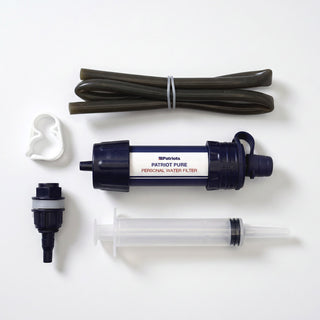
- Store and filter water. FEMA recommends at least one gallon per person per day. A personal filter like the Patriot Pure Personal Water Filter lets you turn streams, rivers and lakes into drinking water if your supply is ever strained. It fits in a pocket, needs no power, and filters up to 1,320 gallons.
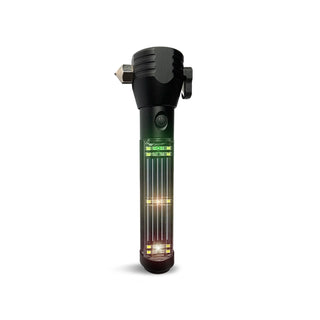
- Have backup power. A solar generator keeps essentials running if the grid gets stretched thin, without relying on fuel deliveries.
Self-reliance starts with knowing who else is drawing from the same well. Whatever your stance on data centers, the best protection is a household that doesn't depend on someone else's promises.